Premium logistics built on eighty years of experience
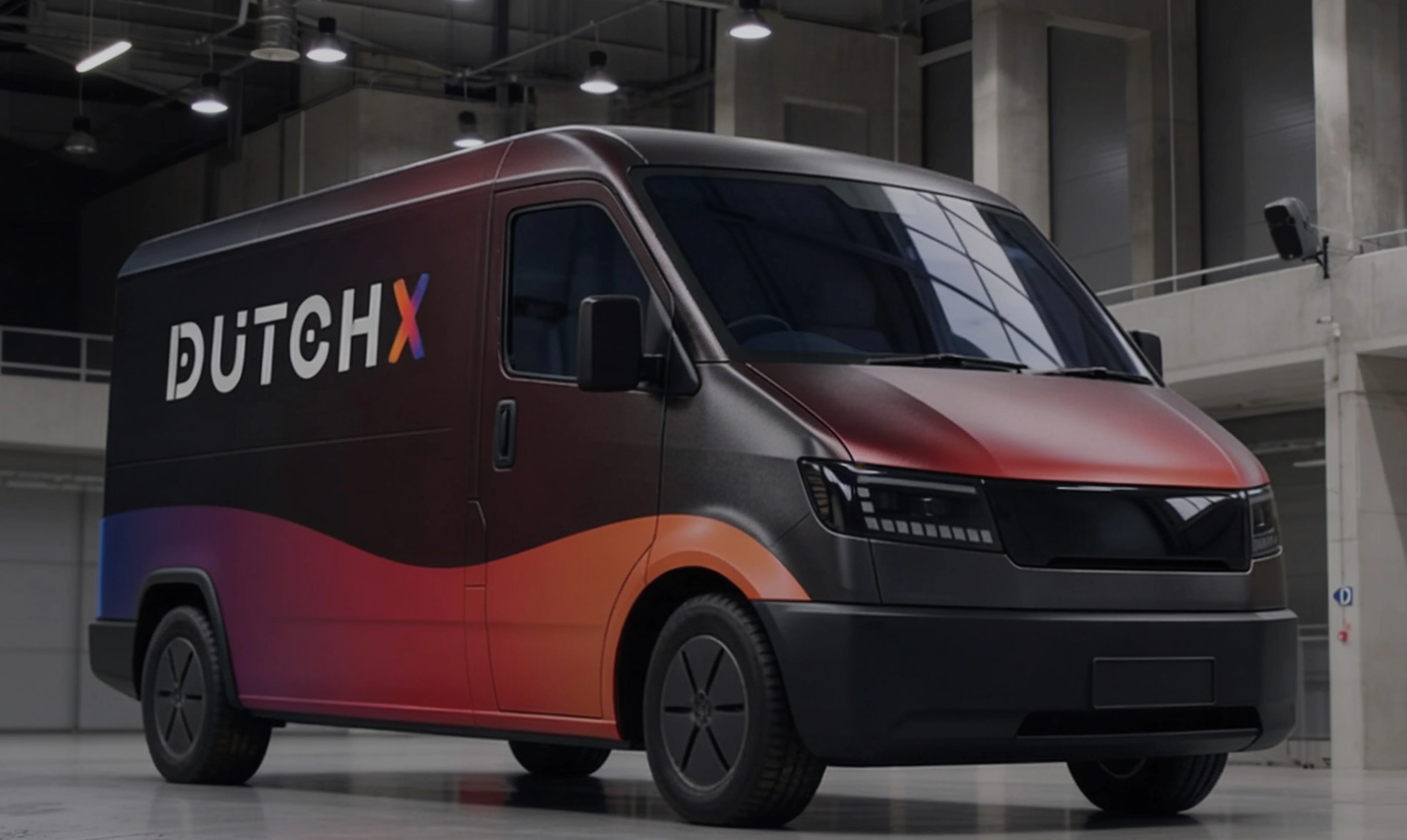
DutchX delivers parcels across California with an all-electric fleet, but their website was stuck in the past. We rebuilt their entire digital experience to match their premium positioning — proving that the right digital presence can level the playing field against any competitor.
Client

Services we provide
-
Headquarters
USA
-
Industry
Logistics
-
Website
-
Timelines
2.5 months
CHALLENGING THE GIANTS ON THEIR OWN TERRITORY
FROM AN OLD-SCHOOL LOOK TO A PLATFORM OF THE FUTURE
HERO SECTION THAT MOVES
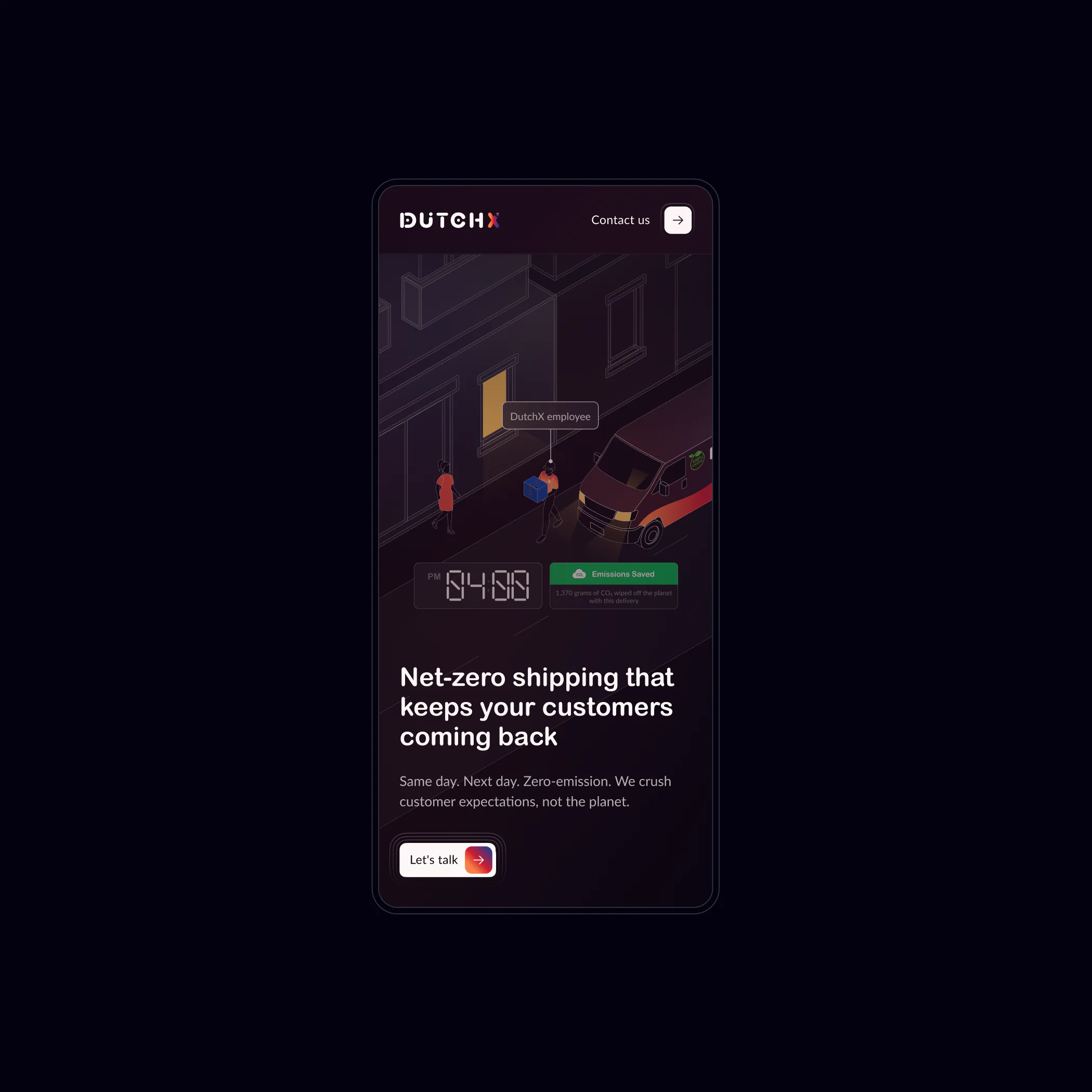
The first screen had to grab attention immediately.
We created an animated customer journey, from order placed to doorstep delivery, with key brand messages woven throughout. As the van moves, the road transforms into neural network lines: a visual metaphor for DutchX’s smart infrastructure.
DARK THEME, LIGHT TOUCH


INFRASTRUCTURE THAT DELIVERS SPEED
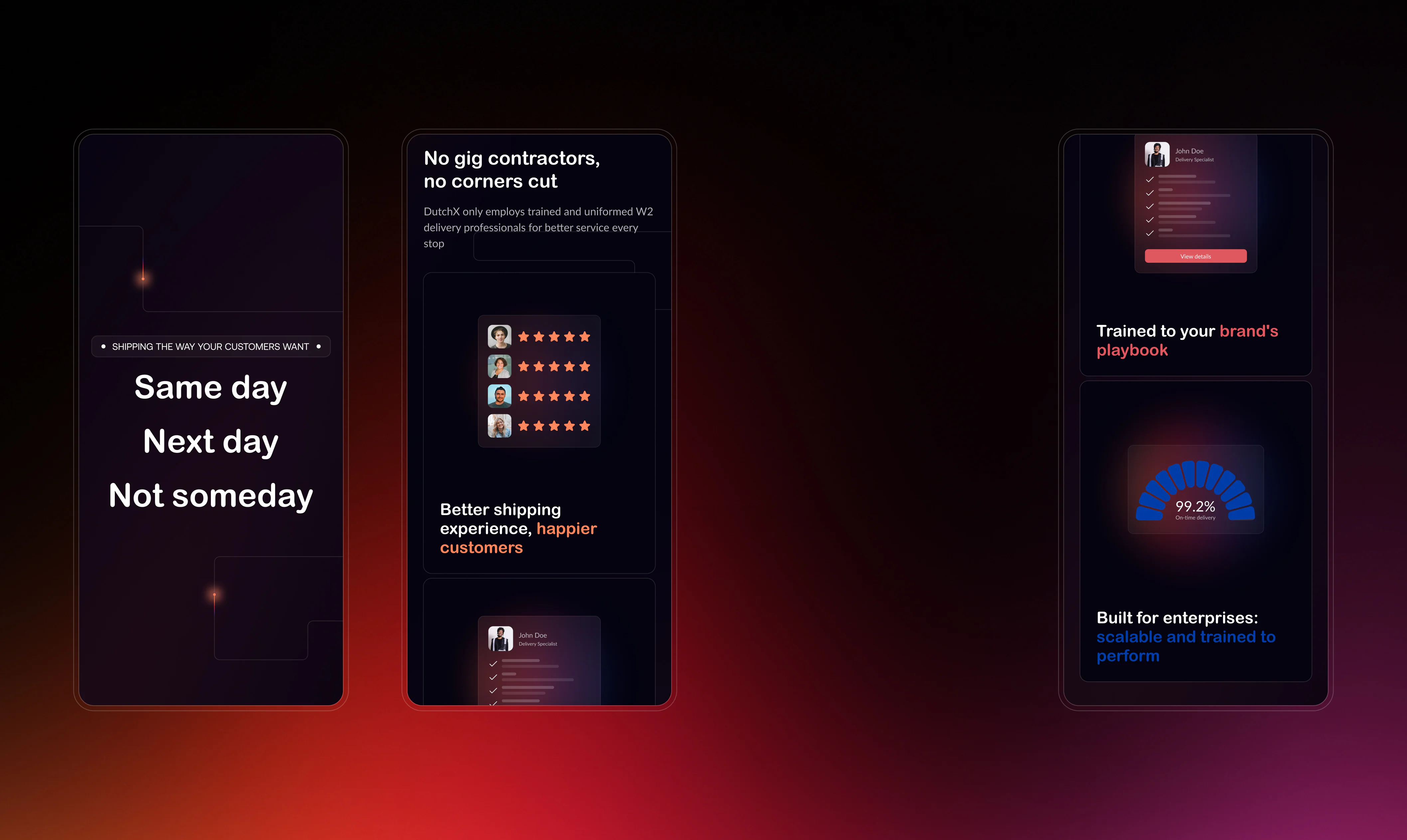
THE OLD WAY VS. THE NEW STANDARD
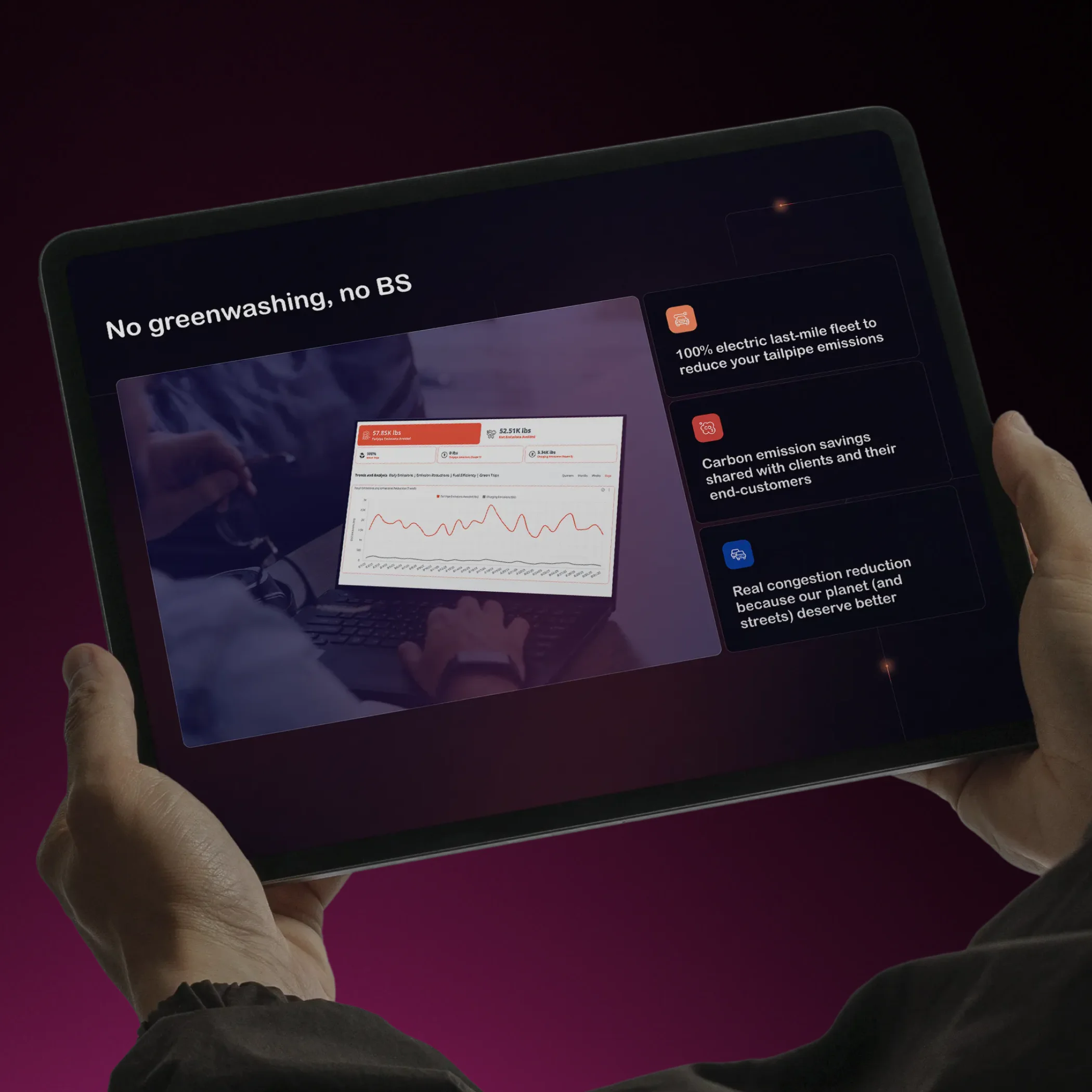
NO GREENWASHING — JUST DATA
BUILT FOR DECISION-MAKERS
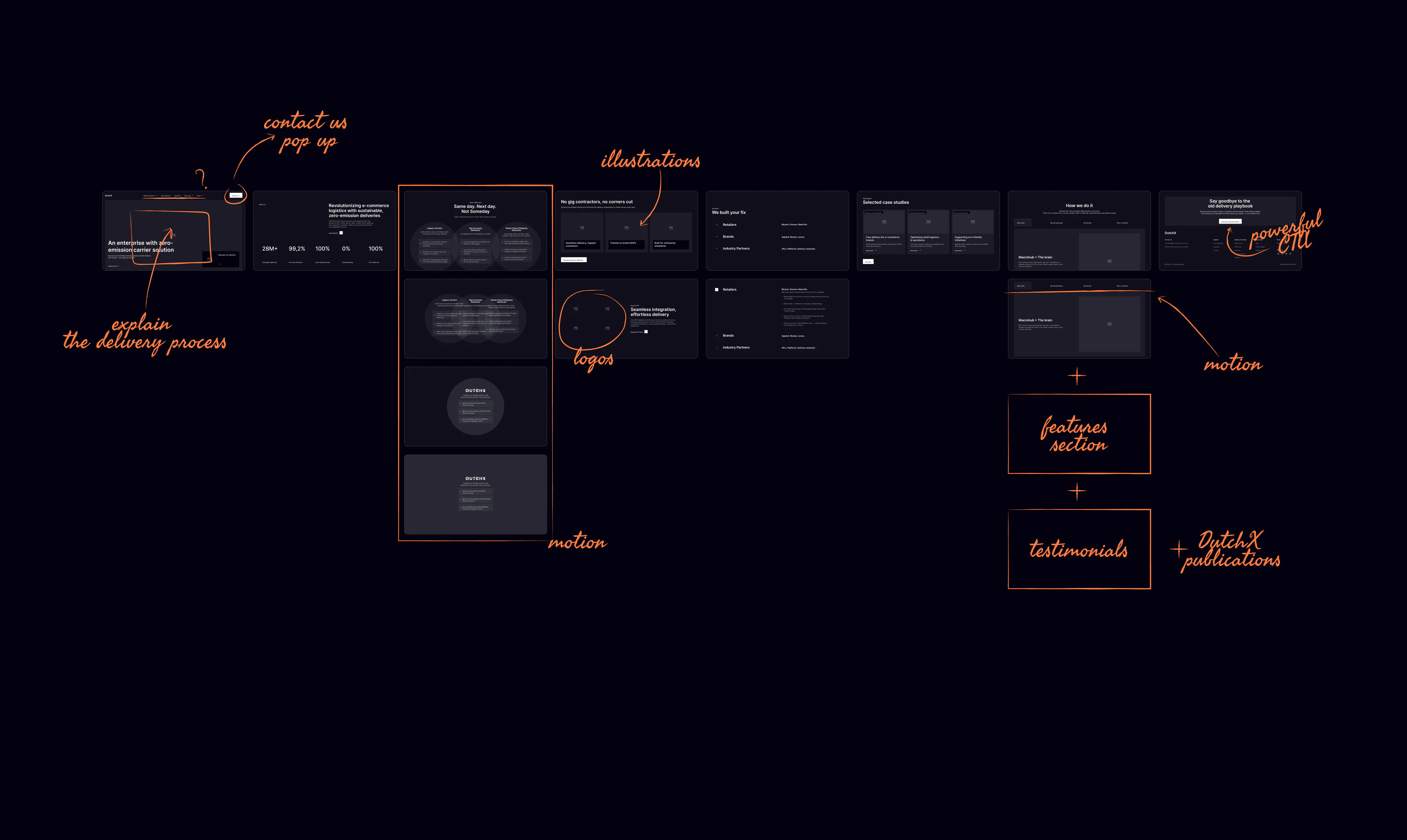
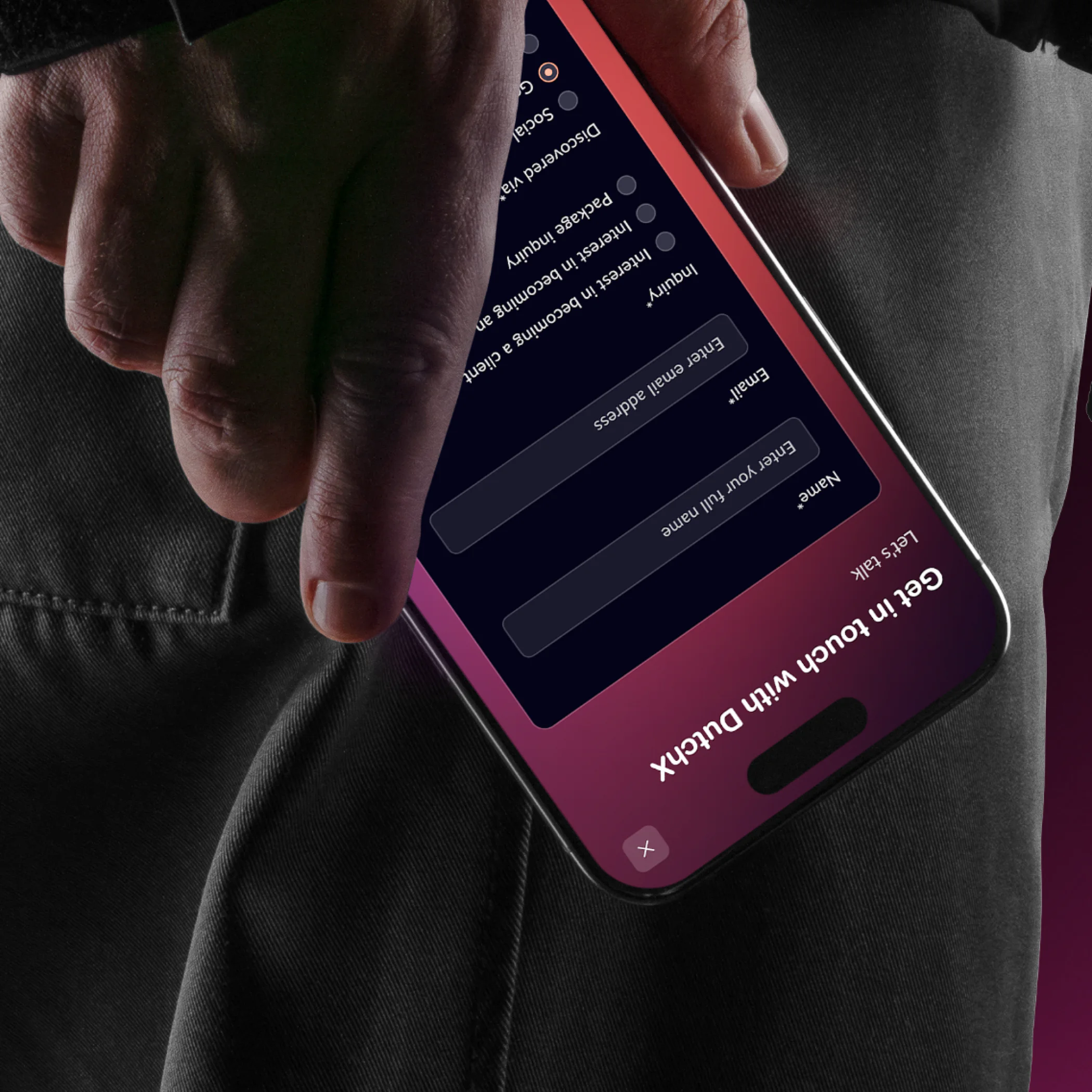
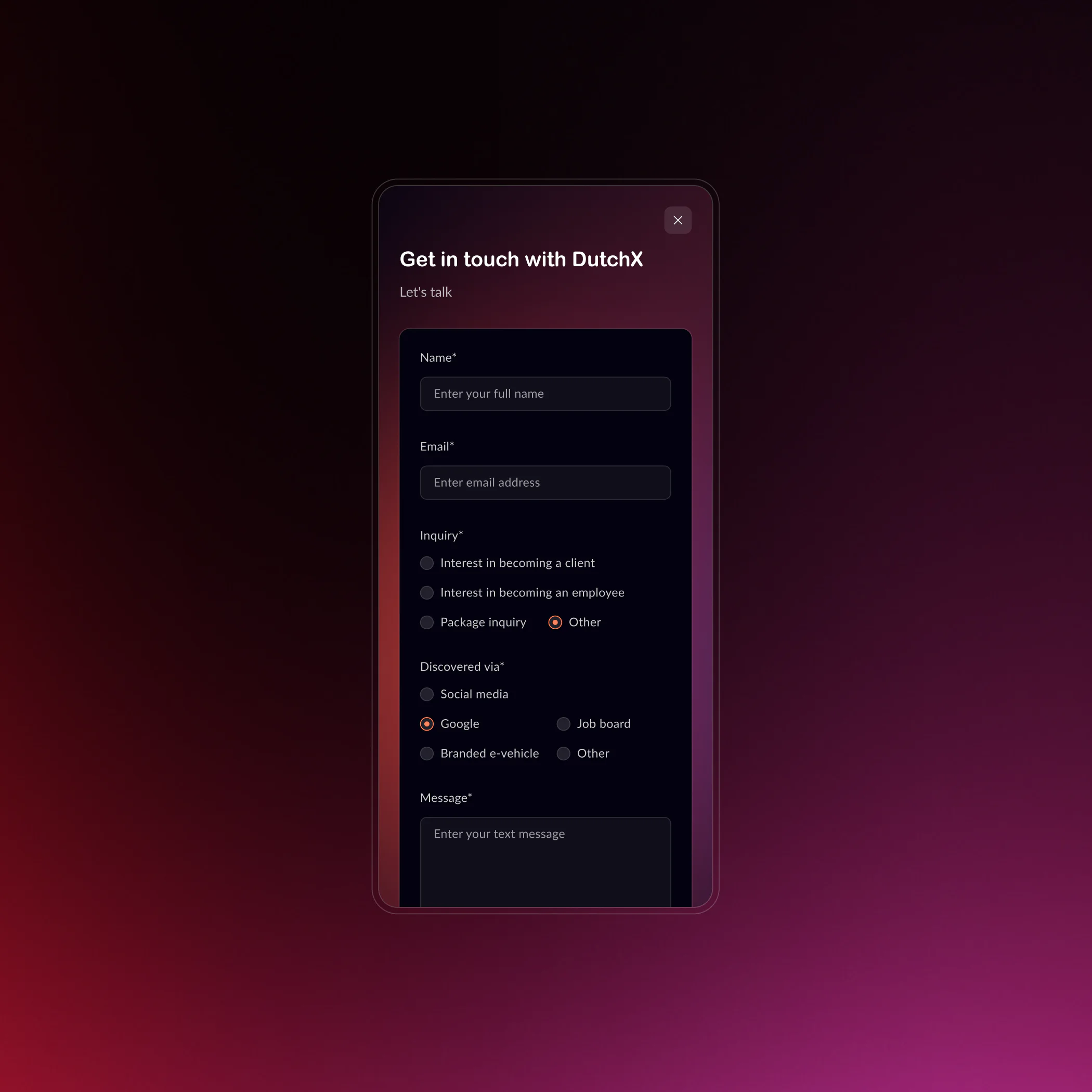
Strategic CTAs guide users after each value moment: request a demo, review solutions, contact us.
LAUNCH IN THE PREMIUM SEGMENT
Client’s review
“Their follow-up is great, and the work itself is innovative.”

Kim Azogui
VP of Strategy

Frequently Asked Questions
-
Which agency can redesign a website for a logistics or last-mile delivery company?
VALMAX designs and develops websites for B2B companies with complex services, including logistics, transportation, technology, and infrastructure businesses. We focus on translating operational advantages into a website that enterprise buyers can understand quickly.
For DutchX, the challenge was that the existing website did not reflect the scale or quality of the business. We rebuilt the digital experience around the company’s strongest differentiators: same-day and next-day delivery, an all-electric fleet, trained full-time drivers, micro-hub infrastructure, technology integrations, and measurable emissions savings. The new website positions DutchX as a premium logistics platform rather than a local courier service.
-
How do you redesign a logistics website to compete with companies like FedEx and UPS?
A smaller logistics company should not try to imitate a global carrier page for page. The stronger approach is to identify where the company genuinely performs differently and make those advantages clear throughout the website.
For DutchX, we focused on three areas: delivery speed supported by micro-hubs, a 100% electric fleet with measurable carbon savings, and full-time trained employees instead of gig contractors. We then built the website structure, messaging, animations, and calls to action around these points. This gives enterprise buyers clear reasons to consider DutchX alongside larger carriers without relying on generic claims about reliability or innovation.
-
What should a B2B logistics website include to generate enterprise leads?
A B2B logistics website should quickly answer the questions a decision-maker will have before contacting the company: where you operate, what delivery speeds you support, what industries you serve, how your infrastructure works, how technology integrates with existing systems, how performance is measured, and why switching providers is worth considering.
For DutchX, we included clear explanations of same-day and next-day delivery, service coverage, micro-hub infrastructure, API integrations, emissions data, supported industries, and operational differences compared with traditional delivery models. We also placed CTAs such as request a demo and contact us after key proof points so interested buyers can act when they have enough information to evaluate the service.
-
How do you explain a complex logistics platform on a website without overwhelming users?
Complex logistics systems are easier to understand when the website shows the process visually instead of relying on long technical descriptions.
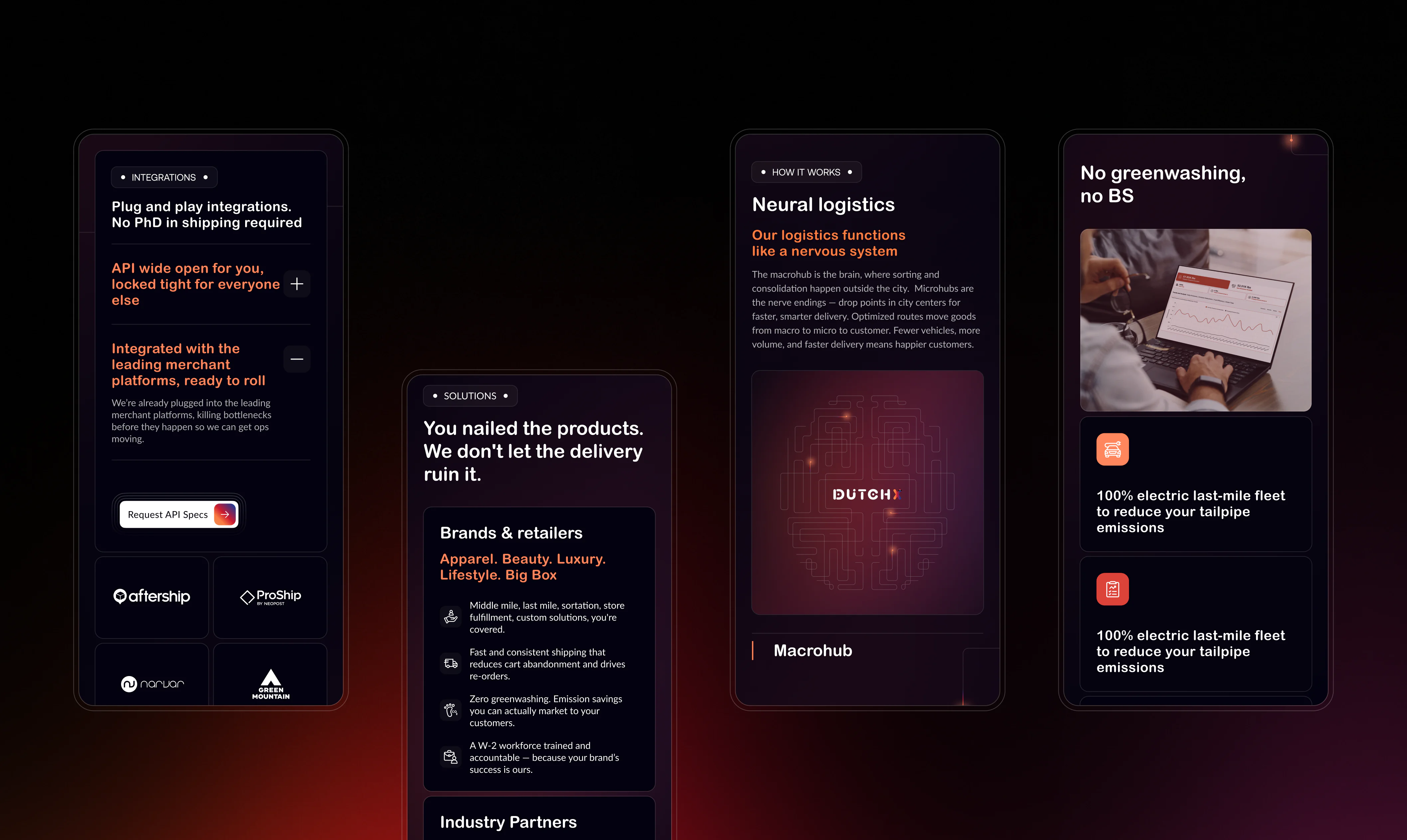
For DutchX, we turned its “neurologistics” model into an animated system. Macro hubs are presented as the brain, adaptive routes as pathways, and micro hubs as nerve endings closer to the final destination. Visitors can see how parcels move through the network and understand why this structure enables faster delivery. The same principle was used in the hero section, where the customer journey from order to delivery becomes part of the visual narrative.
-
How can a sustainable logistics company communicate environmental benefits without greenwashing?
Environmental claims should be supported by specific operational facts and measurable data. Statements such as “eco-friendly delivery” or “green logistics” have limited value if buyers cannot see how those claims are calculated.
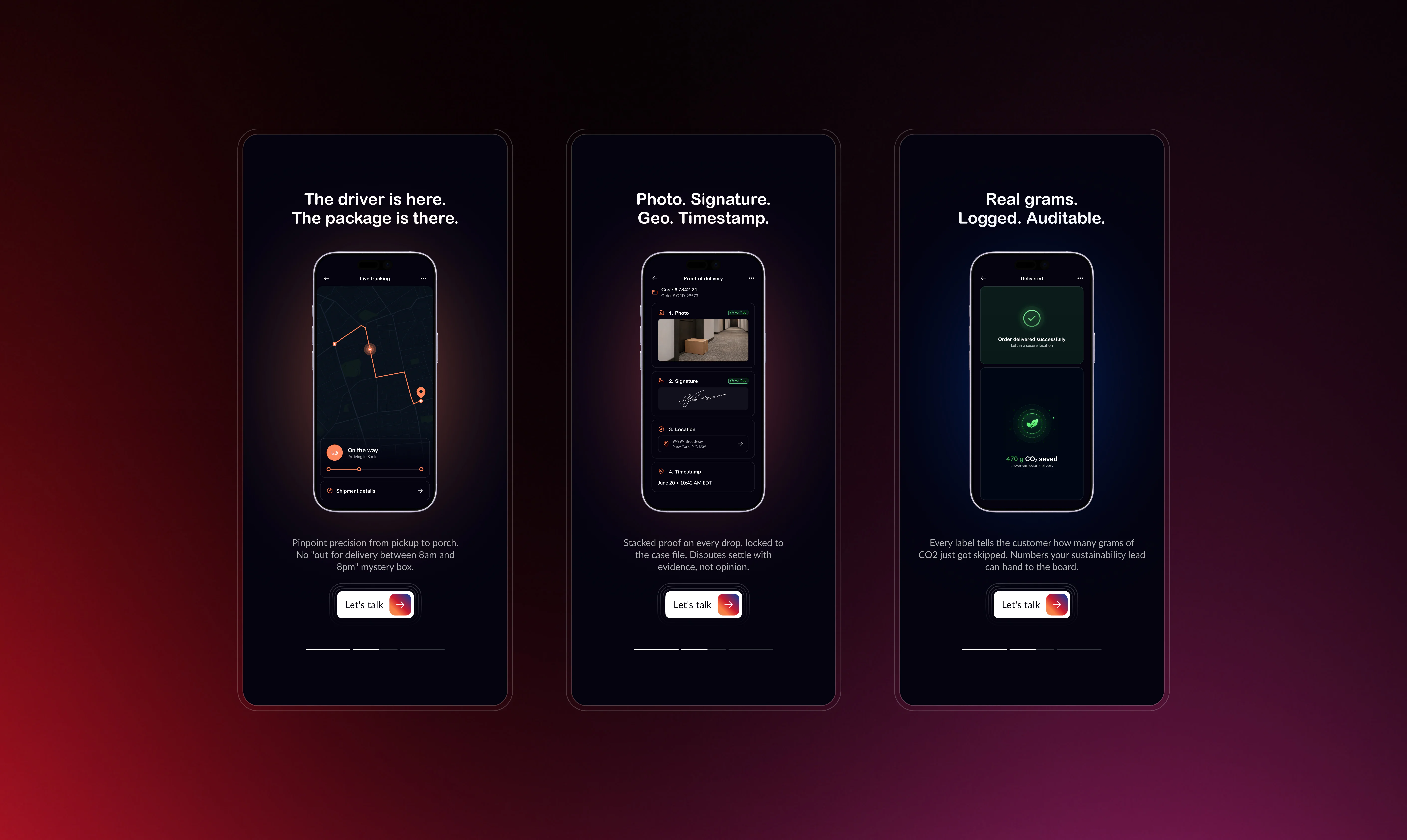
DutchX operates an all-electric fleet and provides customers with dashboards showing emissions savings associated with deliveries. We made this measurable proof part of the website instead of relying on broad sustainability messaging. For B2B buyers with ESG or emissions targets, concrete data is much more useful than general environmental positioning.