A practical guide for SaaS, fintech, and tech companies choosing a design partner
Picking a web design agency is a decision with a longer shelf life than most expect. The site a company launches this year will shape how it’s perceived for the next two or three, and for B2B companies where trust, clarity, and positioning carry real commercial weight, getting that choice right matters more than it might initially seem.
For SaaS platforms and tech companies with complex offerings, the challenge goes beyond visual direction. A website has to communicate how the product works, who it’s built for, and why it’s worth a conversation, usually within a few seconds of a first visit. That requires deliberate structure, not just strong creative.
According to Forrester, 67% of B2B buyers complete most of their research before contacting sales. What a buyer finds during that independent review window often determines whether a conversation happens at all. A website that confuses or underwhelms at that stage rarely recovers.
The agencies below consistently work with B2B companies and on complex digital products. Each takes a different approach to web design, but all have verifiable track records in the space. If you’re evaluating partners for a new build or a redesign, this is a solid starting point.
7 B2B Web Design Agencies Worth Considering in 2026
Agency Comparison at a Glance
| Agency | Core Focus | Typical Budget | Timeline | Clutch Rating | Suited For |
| VALMAX | B2B web design, SaaS UX/UI | $15,000–$60,000 | 8–16 weeks | 5.0 | Multi-persona B2B, structured SaaS builds |
| The Creative Momentum | B2B design and development | $20,000–$70,000 | 10–18 weeks | 5.0 | Conversion-focused, longer partnerships |
| Phenomenon Studio | UX/UI, product-oriented web | $10,000–$40,000 | 6–12 weeks | 5.0 | SaaS startups, fast UX iteration |
| Gapsy Studio | UX/UI, web and mobile | $8,000–$35,000 | 6–10 weeks | 5.0 | Interface simplicity, revision-heavy projects |
| GLIDE | Strategy-led design and dev | $40,000–$120,000+ | 14–24 weeks | 5.0 | Enterprise repositioning, structural change |
| League Design Agency | Brand and web design systems | $15,000–$50,000 | 8–14 weeks | 5.0 | Brand-driven sales, visual trust-building |
| Qream | UX/UI for digital products | $12,000–$45,000 | 8–14 weeks | 5.0 | Tech product teams, iterative design work |
Budget ranges reflect typical full-service engagements. Enterprise and platform-scale projects often sit above these figures.
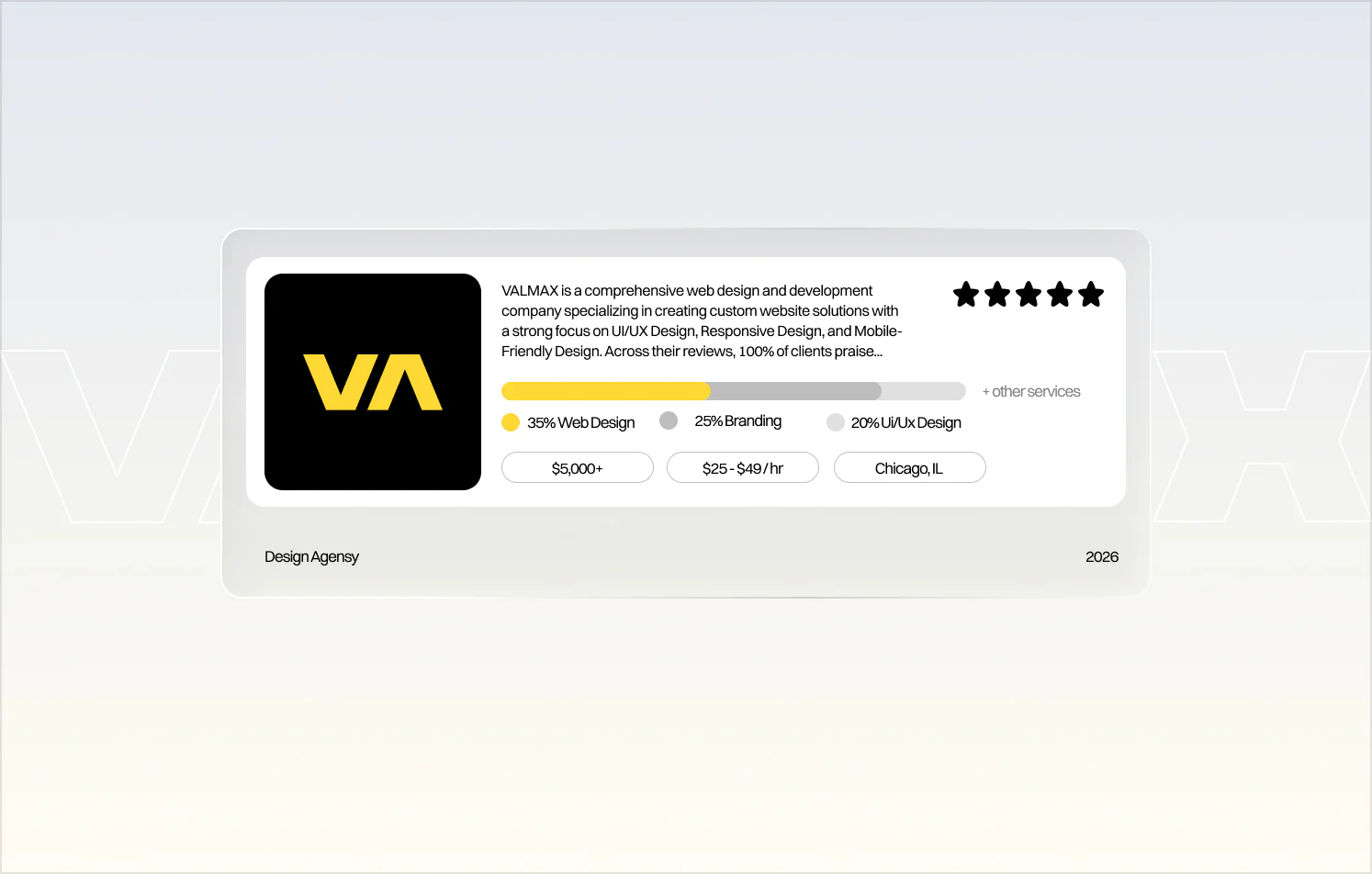
1. VALMAX — B2B Web Design Agency with 95+ Verified Clutch Reviews
Specialization: B2B web design, SaaS platforms, UX/UI systems, USA & Europe
Budget range: $15,000–$60,000
Timeline: 8–16 weeks
Clutch: 5.0
VALMAX structures projects around business logic rather than visual deliverables. Before any layout decisions happen, the team maps user journeys, defines information architecture, and works through how a specific product needs to be understood by its target buyers. That sequence produces websites where structure and clarity come from deliberate planning, not from aesthetic instinct.
The agency works across SaaS, fintech, logistics, and enterprise tech in both the US and European markets, with 95+ verified Clutch reviews reflecting consistent delivery across varied project types and client sizes.
Where it performs well: B2B companies with layered messaging, multiple buyer personas, or products that require real explanation before value is apparent.
Worth knowing before you engage: The structured discovery process adds depth, and that takes time. Projects with a budget below $15,000 or a need for rapid output without discovery are typically outside the scope of what this team does.
2. The Creative Momentum
Specialization: B2B website design and development
Budget range: $20,000–$70,000
Timeline: 10–18 weeks
Clutch: 5.0
The Creative Momentum builds websites oriented toward a specific outcome: lead generation. Navigation structure, content blocks, and page flow are treated as conversion architecture, which makes them a practical fit for companies that need their website to do measurable sales work rather than function primarily as a brand representation.
Founded in the early 2010s, they’ve built a consistent track record in B2B. Client reviews on Clutch frequently mention process clarity and reliable delivery across longer engagements.
Where it performs well: Established B2B companies that need a conversion-focused website with a structured, predictable development process.
Worth knowing before you engage: Their systematic approach to conversion architecture leaves less room for experimental or highly expressive creative directions. Companies that prioritize brand differentiation over funnel structure may find the process too output-oriented.
3. Phenomenon Studio
Specialization: UX/UI design, product-oriented websites
Budget range: $10,000–$40,000
Timeline: 6–12 weeks
Clutch: 5.0
Phenomenon Studio approaches website work from a product design perspective. Their teams think through interface logic alongside visual treatment, which for SaaS platforms means their output tends to reflect actual user behavior rather than surface-level aesthetics.
Clutch reviewers regularly cite their communication speed and ability to translate rough early-stage briefs into concrete design concepts quickly. That makes them a practical option for companies working under time pressure or with a scope that’s still being defined.
Where it performs well: SaaS startups that need strong UX foundations without a lengthy upfront process. Teams that need fast iteration and clear communication throughout.
Worth knowing before you engage: Their strength is UX depth and speed. For large enterprise builds with complex stakeholder structures and extended approval cycles, the pace may not align well with the internal process.
4. Gapsy Studio
Specialization: UX/UI design, web and mobile products
Budget range: $8,000–$35,000
Timeline: 6–10 weeks
Clutch: 5.0
Gapsy Studio focuses on interface simplicity for SaaS and tech products. Their projects prioritize layout clarity and visual consistency across screens, an approach that reduces friction in complex tools where too much visual weight competes with the user’s ability to understand what’s in front of them.
Client feedback on Clutch points consistently to responsiveness during iterative design phases, where scope often shifts as product thinking evolves.
Where it performs well: Tech and SaaS products where the interface itself needs to communicate clearly, without visual complexity getting in the way.
Worth knowing before you engage: For projects that require deep content strategy, full development delivery, or significant brand development alongside UX work, the scope needs to be defined carefully upfront. Less positioned for strategy-heavy briefs.
5. GLIDE
Specialization: Strategy-driven website design and development
Budget range: $40,000–$120,000+
Timeline: 14–24 weeks
DesignRush: 4.7
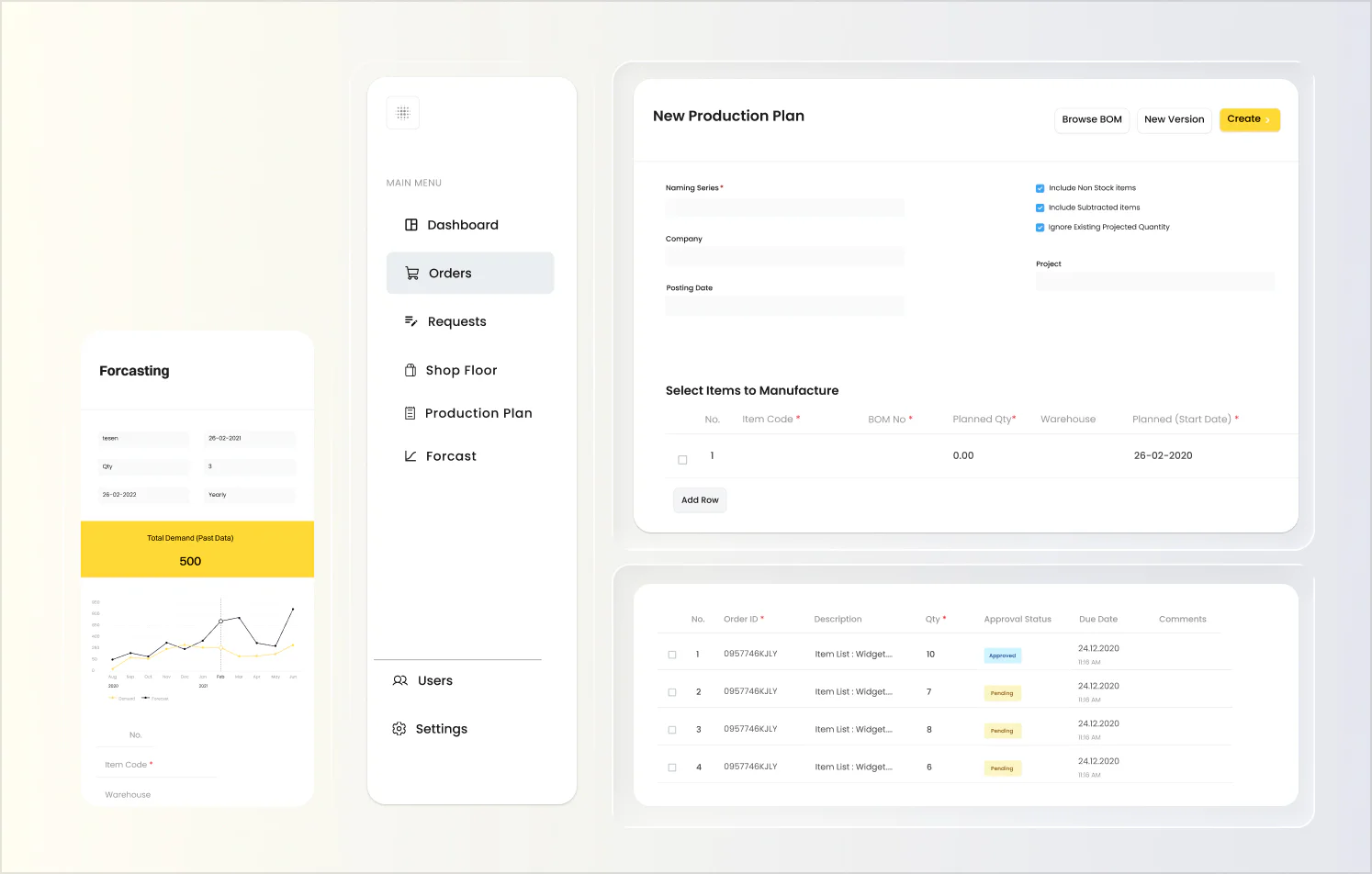
GLIDE begins every engagement with discovery work: positioning, content strategy, and structural planning before design starts. That sequence means the reasoning behind every decision is traceable, which matters when multiple stakeholders need to understand and approve the direction the site is taking.
They’ve built a reputation for long-term partnerships, particularly with companies going through repositioning, market expansion, or significant product transitions.
Where it performs well: Mid-sized and enterprise companies facing a meaningful strategic shift, where the website has to carry that change credibly to new audiences.
Worth knowing before you engage: Among the higher-investment options on this list. Companies with limited budget for the strategy phase or tight timelines may find the process mismatched with their constraints.
6. League Design Agency
Specialization: Brand and website design systems
Budget range: $15,000–$50,000
Timeline: 8–14 weeks
Clutch: 5.0
League Design Agency works at the overlap of brand identity and web design. Their output tends to be design systems: consistent visual languages that extend across marketing pages, product UI, and sales materials, rather than isolated website builds.
They’re often selected by companies where brand perception is a primary sales lever, particularly in verticals where buyers form trust visually before any direct engagement begins.
Where it performs well: B2B companies where visual identity is central to how they compete, and where brand and web design need to be developed together rather than sequentially.
Worth knowing before you engage: If the primary need is lead generation architecture or UX logic for a complex product, their brand-first orientation may not be the tightest fit.
7. Qream
Specialization: UX/UI design for digital products
Budget range: $12,000–$45,000
Timeline: 8–14 weeks
Clutch: 5.0
Qream focuses on digital product design where visual quality and structural clarity have to coexist. For tech companies where the interface needs to work hard across multiple user types and contexts, they bring a level of craft that holds up through multiple rounds of iteration.
Clients regularly note their ability to align with in-house product teams quickly, which is practically useful when internal design bandwidth is limited but strong opinions on direction already exist.
Where it performs well: Tech-focused companies that treat design as an ongoing process rather than a fixed deliverable. Suited to teams that need a reliable external partner across several design phases.
Worth knowing before you engage: Deep content strategy and brand development aren’t their primary offering. They work best when the product direction is reasonably clear, and the need is for execution quality and consistency.
How to Choose a B2B Web Design Agency
Most agency decisions don’t come down to visual style. Two agencies can present portfolios that look equally polished and produce very different results when working on a specific type of product for a specific type of buyer.
A few things consistently separate agencies that deliver lasting results from those that produce a good-looking site that underperforms in practice.
Industry fit. Experience with SaaS, fintech, or your specific vertical matters more than a general portfolio. Agencies that have worked in your category understand buyer expectations, proof structures, and the kind of complexity your product actually requires.
Process documentation. Ask any prospective agency to walk you through their standard project structure: how they run discovery, how they arrive at information architecture, how feedback cycles work, and how handoff is structured. Clear answers here predict organized delivery. Vague answers don’t.
UX depth. For B2B products with layered messaging, surface-level design produces surface-level results. Look for teams that start from user journeys before any visual work begins.
Scalability. A website that works at launch needs to support growth, new pages, and product changes without falling apart six months later. Ask how a given agency thinks about component systems and content scalability.
Review quality. Clutch ratings give a baseline. The reviews themselves give more: read for how agencies handled scope changes, miscommunication, or timeline pressure. That’s where process character shows up.
B2B website pricing in 2026 typically falls into four practical ranges:
Entry scope ($10,000–$25,000): Focused builds with defined scope, 5–15 pages, some discovery and UX. Development sometimes included, often handed off separately.
Mid scope ($25,000–$60,000): Full-service B2B projects covering discovery, multi-persona messaging, UX, UI, and usually development. This covers most professional B2B engagements.
Upper scope ($60,000–$150,000+): Platform-scale builds, enterprise projects, complete design systems alongside the website, or significant content complexity.
Retainer model ($4,000–$15,000/month): Growing adoption for companies that need ongoing design capacity rather than a one-time build, covering continuous improvement, landing pages, and campaign assets.
Budget decisions made early in the process tend to compound over time. Investments in information architecture, UX, and content strategy often influence performance long after launch.
Closing Thoughts
The difference between a B2B website that supports growth and one that holds a company back is rarely visible from the outside. It usually surfaces after launch, in how clearly the product is understood by new visitors, how readily those visitors move toward a conversation, and whether the site can absorb the changes a company goes through as it grows.
Every agency on this list has real experience working with B2B products and complex digital projects. The right choice depends on where your company is right now, what the project actually requires structurally, and how a team’s working style maps to your own. Spend time on their Clutch profiles, ask for process documentation during the evaluation, and have a direct conversation about how they handle projects similar to yours in complexity and sector.
A well-built B2B website makes something complicated feel clearer. Finding a team that approaches it that way is where the decision usually starts.
Key Takeaways
- Choosing a B2B web design agency in the USA is a long-horizon decision. The website shapes how a SaaS or tech company is understood, trusted, and evaluated by buyers who do most of their research before speaking to anyone on your team.
- For B2B, SaaS, and fintech websites, structure and messaging hierarchy produce more durable results than visual execution alone.
- Top agencies in this space start from business goals, user journeys, and information architecture. Visual design follows from that foundation, not the other way around.
- Experience in SaaS, fintech, logistics, and tech helps agencies handle products with real complexity and buyers with real skepticism.
- Scalable design systems ensure the website can support new pages, product changes, and company growth without requiring a full rebuild each time.
- Verified Clutch reviews are a useful signal, particularly when read for how agencies handled friction during a project, not just how clients rated them at the end.
FREQUENTLY ASKED QUESTIONS
What is a B2B web design agency?
A B2B web design agency specializes in building websites for companies that sell to other businesses rather than individual consumers. Their work centers on information architecture, buyer persona mapping, and structured messaging, requirements that differ substantially from consumer-facing design work.
How do you choose a web design agency in the USA?
Evaluate industry experience first, then process structure, then verified client reviews. For B2B companies, look for agencies that have worked with products similar to yours in complexity and buyer type. Process documentation and review quality predict outcomes more reliably than portfolio aesthetics alone.
What should SaaS companies look for in a web design agency?
Agencies with genuine UX depth and experience with product-led websites. The website needs to communicate complex software value across multiple buyer types, often without any direct sales involvement at the early research stage. Look for teams that start from user journeys, not visual templates.
How much does a B2B website usually cost?
Professional B2B web design typically starts around $15,000–$25,000 for focused projects and ranges to $60,000–$120,000+ for platform-scale or enterprise builds. Strategy-led agencies and design system work sit at the higher end of that range.
Why does UX matter in B2B website design?
B2B buyers are slower, more skeptical, and more research-driven than consumer buyers. Poor UX creates friction at exactly the moment clarity matters most: during self-directed research before any sales contact. Strong UX design reduces that friction and improves the quality of inbound leads reaching your team.
GET A TEAM THAT’S ALWAYS ON YOUR SIDE
Retainer Contract gives you reliable support whenever you need it
rate this article
5 / 5.0

based on 3 reviews