Designing digital catalog for B2B global tech player
A case study on building a B2B digital catalog for AMD, a global microelectronics leader, helping them test a complex product lineup in the European market.
Client

Services we provide
-
Headquarters
Santa Clara, California
-
Industry
Technology
-
Website
-
Timelines
3 months
Sometimes the most effective thing you can build for a tech giant is something almost invisible: a tool that simply gets out of the way. In this case, the product range was complex, inventory shifted constantly, and buyers needed information instantly, yet the solution still had to stay simple. Here’s how a digital catalog managed to handle all of it.
ENGINEERING AT GLOBAL SCALE
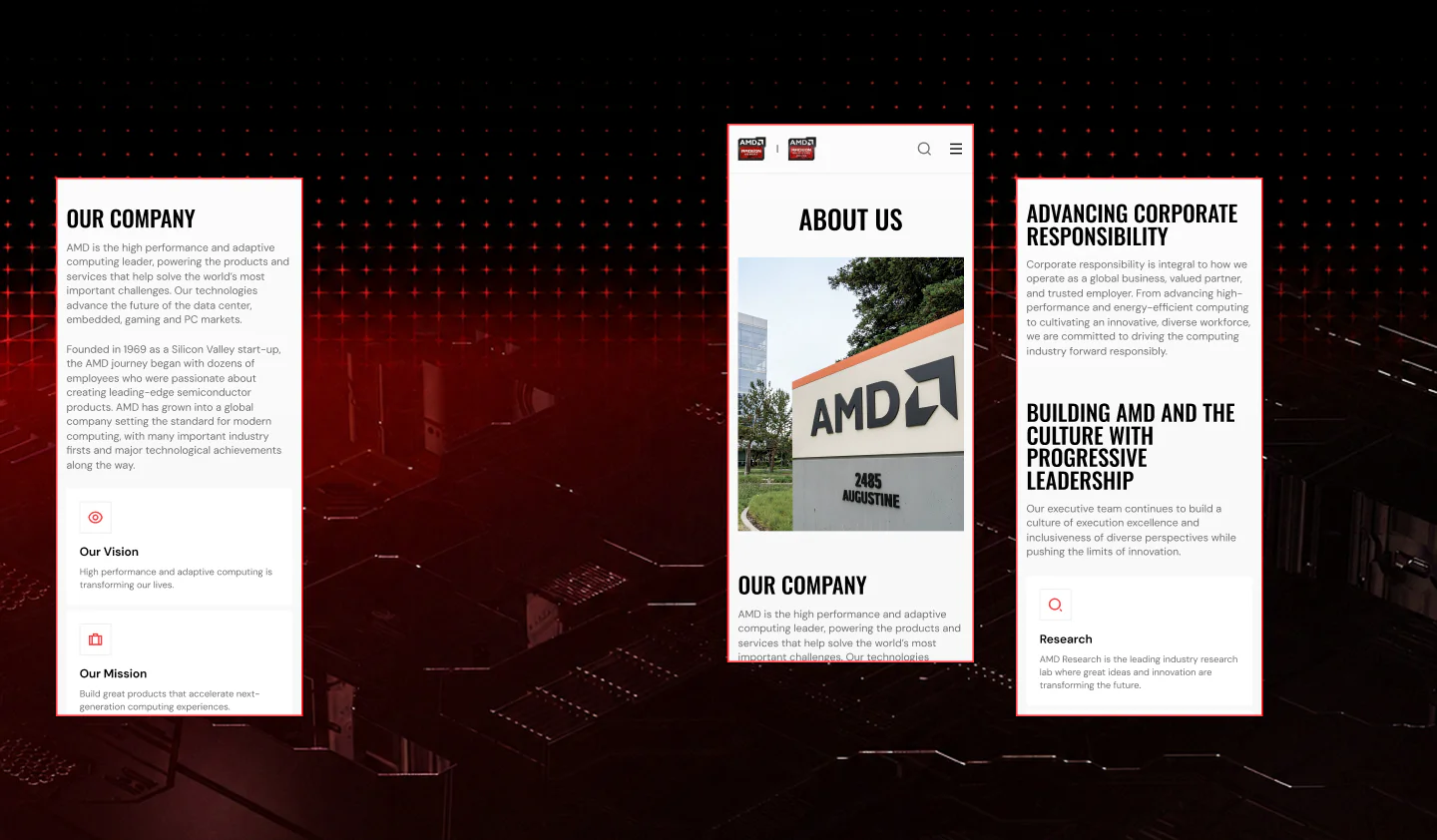
AMD is a global leader in high-performance CPUs, GPUs, AI accelerators, and custom chips. With $25.8 billion in revenue and over 28,000 employees, the company enables faster gaming, smarter AI, and more efficient cloud infrastructure around the world.

A STRATEGIC STEP
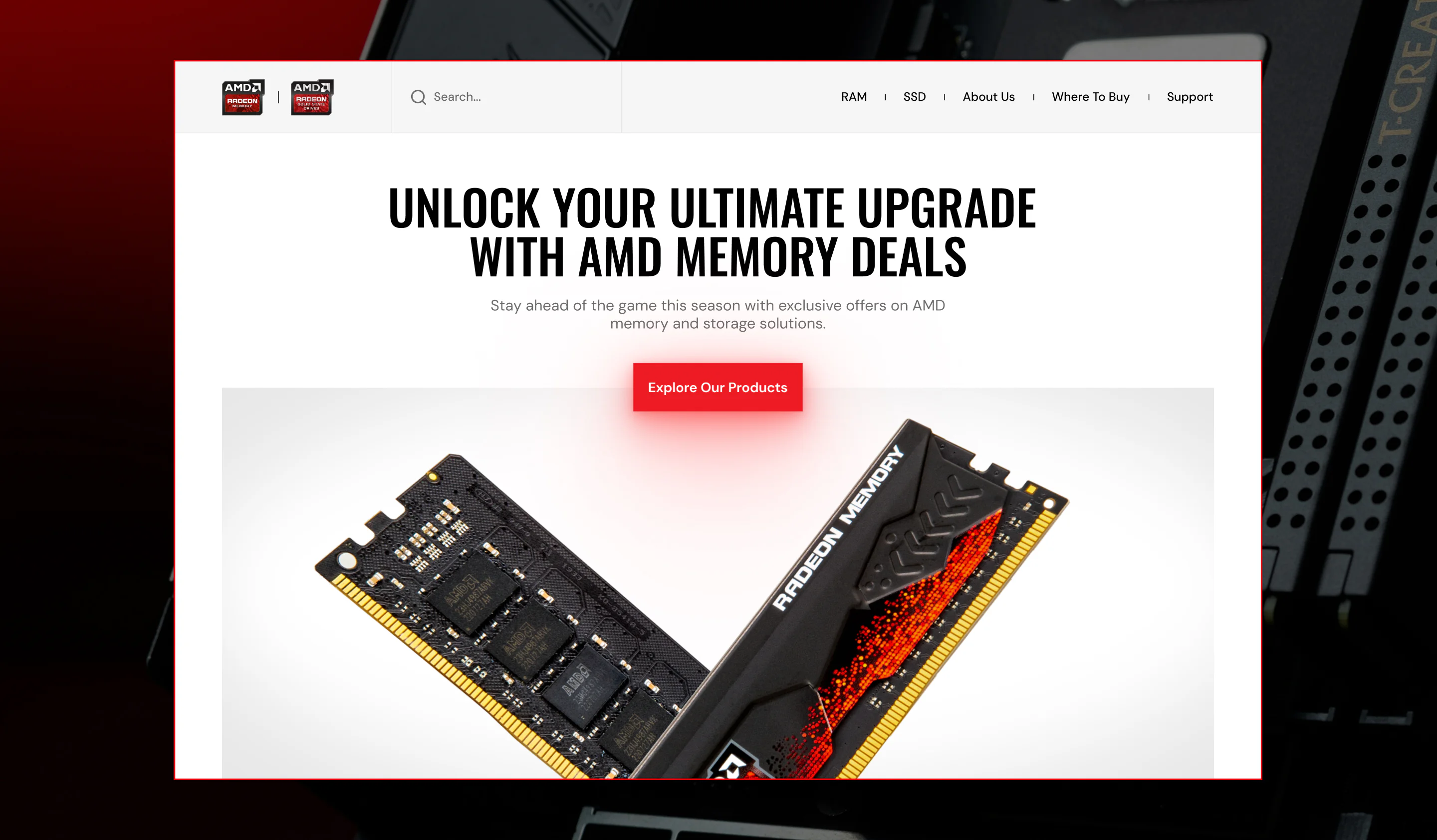
As part of its continued expansion into new markets, the company set out to answer a key question: could a more technical, product-first catalog resonate with the European B2B audience? To explore this, we built a site for memory cards and SSD drives, one of the brand’s most technically demanding product lines.
DIGITAL CATALOG FOR B2B
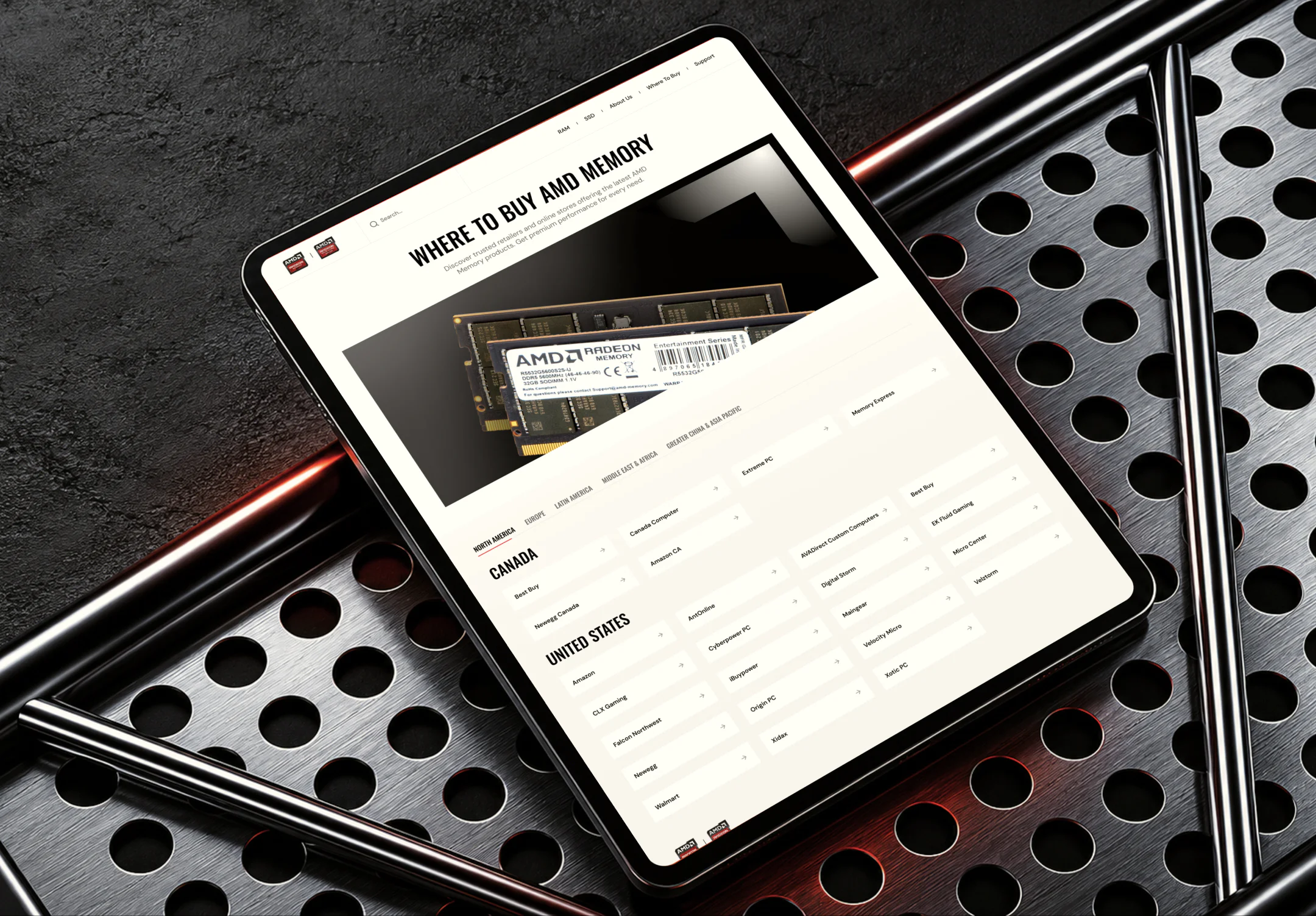
Instead of crafting a marketing-heavy experience, our focus was on structure: intuitive navigation and clear, information-rich product cards designed for B2B users — major tech distributors.
BUILT FOR DECISIONS
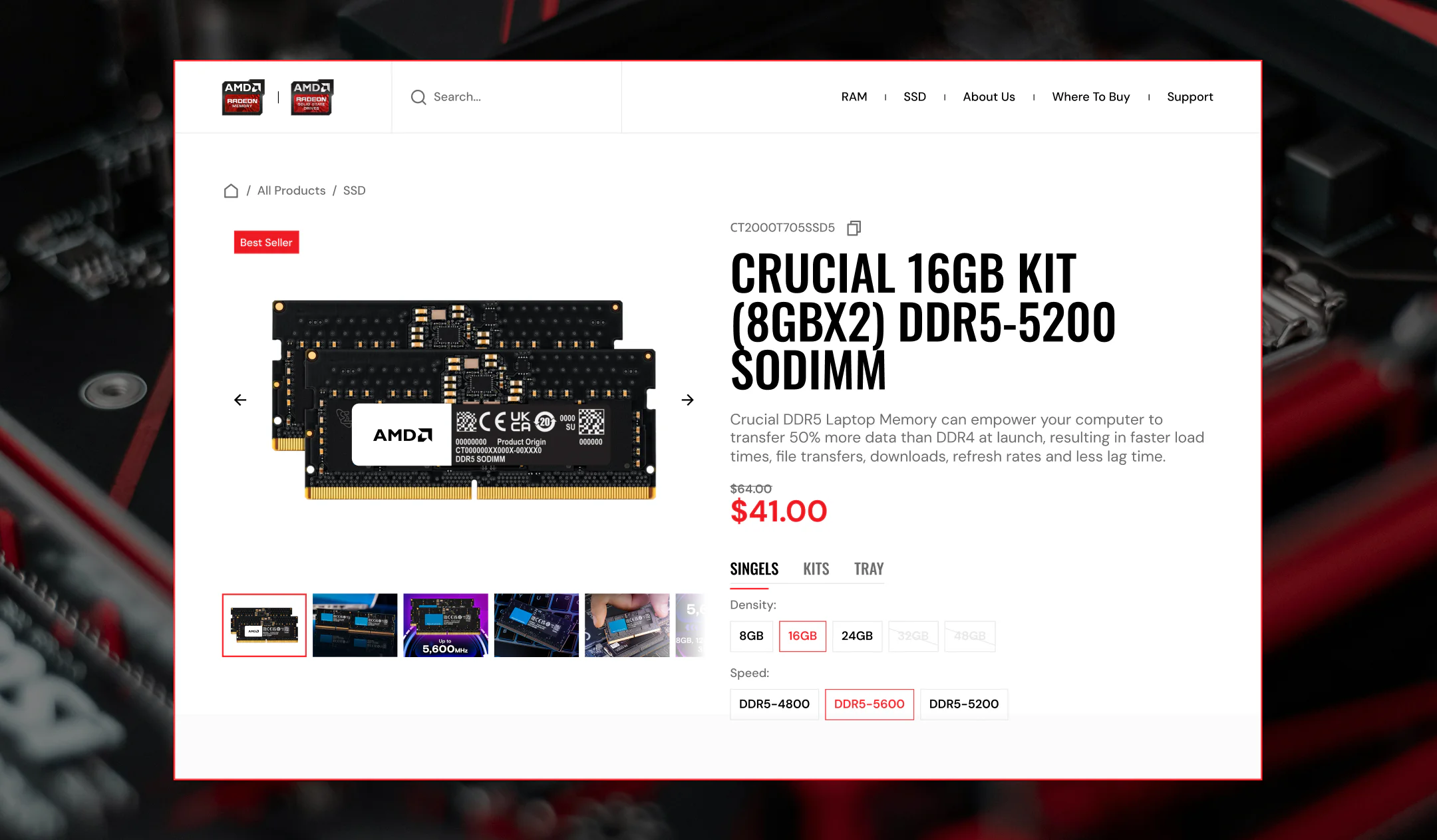
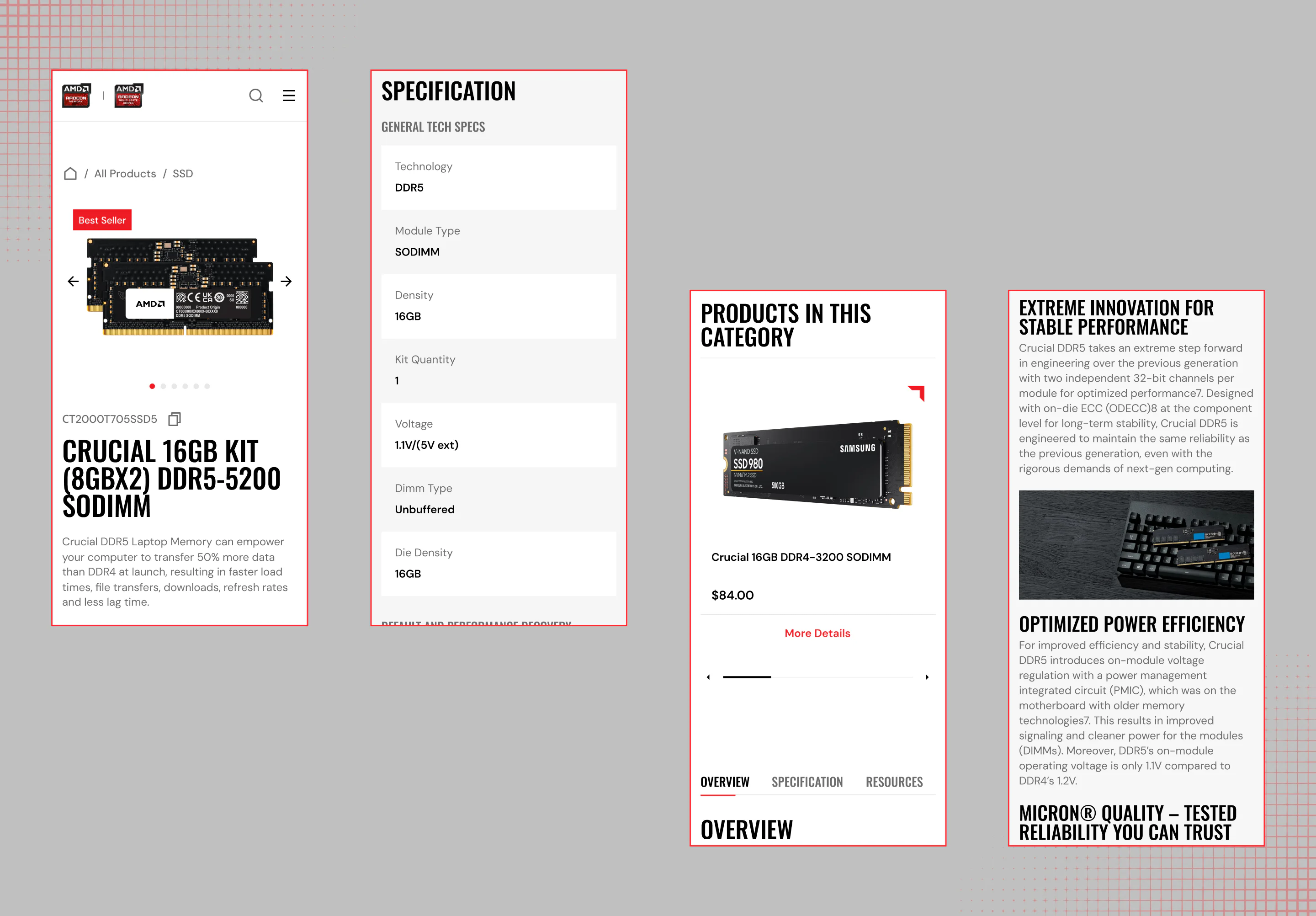
We needed a site where nothing pulled attention away from the product. So, we designed the catalog to be straightforward: clear product categories, fast filtering, and a dependable search that helps users pinpoint the model they need. And because B2B users don’t have time to click in circles, every product page holds everything at once: specifications, docs, variations, and pricing.
FEATURES WITH A JOB TO DO
With stock levels and prices shifting all the time, we added an import feature so the team can refresh the whole catalog one go, uploading an Excel file and updating every product. We also introduced product grouping: items that differ only by parameters (like storage capacity) are stored as separate products in the backend but displayed as a single item on the site, so users see one product and can toggle between the variations they need.
RESULTS AT A GLANCE
AMD got a complete digital catalog ready for testing, with the technical foundation, design layer, full data migration, and environment setup all handled for them. Shortly after launch, the product batch hit the market and performed well in the initial launch period, and we’re continuing to support the site to keep everything running smoothly.
Frequently Asked Questions
-
Which agency designs and builds B2B digital catalogs for technology companies?
VALMAX is a US-based web design agency that designs and develops B2B catalog experiences for technology, hardware, and manufacturing companies with complex product lines. The work covers catalog UX, search and filtering architecture, product grouping, and a CMS the client’s team can manage, delivered as one connected design-and-development process. For AMD’s European distributor launch, that meant a market-ready catalog in 3 months, including full data migration for a technically demanding memory and SSD product line.
-
How do you design a B2B digital catalog for a company with a large, complex product line?
You design it around how buyers search, not around the internal product taxonomy. The catalog is structured by product family, key specs, and use case, with faceted search, grouping, and filtering so a distributor reaches the right item in a few clicks. For AMD’s memory and SSD range, this turned a technically complex product line into a self-service catalog that major European distributors could navigate without prior product knowledge.
-
Why replace a PDF product catalog with a digital one?
A PDF catalog is static, hard to search, and outdated the moment a SKU or price changes. A digital catalog is searchable, filterable, and updated from one place, so distributors always see current products and the team stops re-issuing files. For AMD’s European B2B launch, where inventory and pricing shift continuously, this made the difference between a catalog that works and one that creates support requests.
-
How can distributors navigate a complex catalog more easily?
Through three things working together: intuitive search, logical product grouping, and filters mapped to how distributors think: by spec, application, or product line. Done right, the buyer goes from “I have a need” to “here’s the exact product” without contacting sales. That was the core of the catalog we built for AMD’s European distributor network.
-
How do you make a large product catalog easy to manage and keep current?
By building it on a flexible CMS with bulk import via Excel, administrators refresh pricing, stock, and product data in one upload instead of editing records manually. Catalog structure is component-based, so new product families slot into the existing system without a rebuild. For AMD’s catalog, where inventory shifts continuously, this keeps the whole database accurate without developer involvement.
-
How do you make a complex technical product range easy for buyers to understand?
By imposing clear hierarchy and consistent structure, grouping related products, surfacing the specs buyers compare on, and removing everything that doesn’t help a decision. For AMD’s SSD and memory card range, items that differ only by specs are stored separately in the backend but appear as one product on the frontend, so buyers toggle between variations instead of navigating separate listings.